The $9 Billion Hidden Cost: Why Domestic Violence is a Small Business Issue
- Jayme Lin Rose

- Mar 28
- 5 min read
When we talk about business consulting at Skiendziul & Luzzi Enterprises LLC, we usually spend a lot of time looking at spreadsheets, tax strategies, and marketing plans. We talk about growth. We talk about efficiency. But today, I want to talk about something that often stays hidden in the shadows of the "home life" category, yet it has a massive, measurable impact on your business's bottom line.
We’re talking about domestic violence.
It’s a heavy topic, I know. But it’s one we need to address with the same clarity and strategic mindset we use for any other business challenge. Why? Because domestic violence isn't just a personal tragedy or a social issue. It is a workplace issue.
If you think your small business is immune, the numbers suggest otherwise.
The Staggering Price Tag: $9 Billion Annually
Let’s look at the hard data first. According to a widely cited Forbes report, domestic violence costs American industry somewhere between $8 billion and $9 billion every single year.
That is not a typo.
When we look at the macro-economic scale, the figures are even more jarring. Survivors of domestic violence lose nearly 8 million paid work days annually in the U.S. alone. To put that into perspective, that is the equivalent of more than 32,000 full-time jobs vanishing into thin air.
As a small business owner, you might think, "Well, that’s a corporate problem." But the truth is, the impact is often felt more acutely in smaller teams. In a massive corporation, a drop in productivity might be absorbed by a department of hundreds. In a small business, if one of your key players is struggling, the whole ship leans.

Where Does the Money Go?
You might be wondering how "home life" translates into a multi-billion dollar hit to the economy. It doesn't happen all at once; it’s a "death by a thousand cuts" scenario for a business's productivity.
1. Lost Productivity and "Presenteeism"
Productivity isn't just about being physically present at a desk. It's about mental focus. Research shows that over half of domestic violence survivors experience significant professional consequences. This includes being distracted at work, having to take reduced hours, or eventually being forced to resign.
There’s a term for this: presenteeism. This is when an employee is physically at work but isn't functioning at their full capacity because they are dealing with trauma, fear, or the logistical nightmare of navigating an abusive situation.
2. Absenteeism
Then there is the direct loss of time. Survivors often have to miss work for court dates, medical appointments, or simply because they are being physically prevented from leaving their homes. When an employee misses work unexpectedly, it disrupts schedules, delays projects, and puts an unfair burden on the rest of the team.
3. Healthcare Costs
Domestic violence leads to significant physical and mental health issues. For businesses that provide health insurance, this translates to higher premiums and more frequent claims. Even for those that don't, the physical toll on an employee leads to more sick days and slower recovery times from standard illnesses.
4. Turnover and Recruitment
Economic abuse is present in 99% of domestic violence cases. Often, an abuser will intentionally sabotage a survivor's job to keep them financially dependent. This leads to job loss or forced resignation. For you, the business owner, this means losing institutional knowledge and spending thousands of dollars to recruit, hire, and train a replacement.
It’s a Workplace Safety Issue
Beyond the financial spreadsheet, we have to talk about safety. We want our workplaces to be sanctuaries of productivity and community. However, the reality is that the workplace is often the only place an abuser knows they can find their victim.
When domestic violence spills into the office, through harassing phone calls, unannounced visits, or worse, it affects everyone. Coworkers become concerned, distracted, and in some cases, fearful for their own safety. This creates a ripple effect that can tank the morale of an entire office.
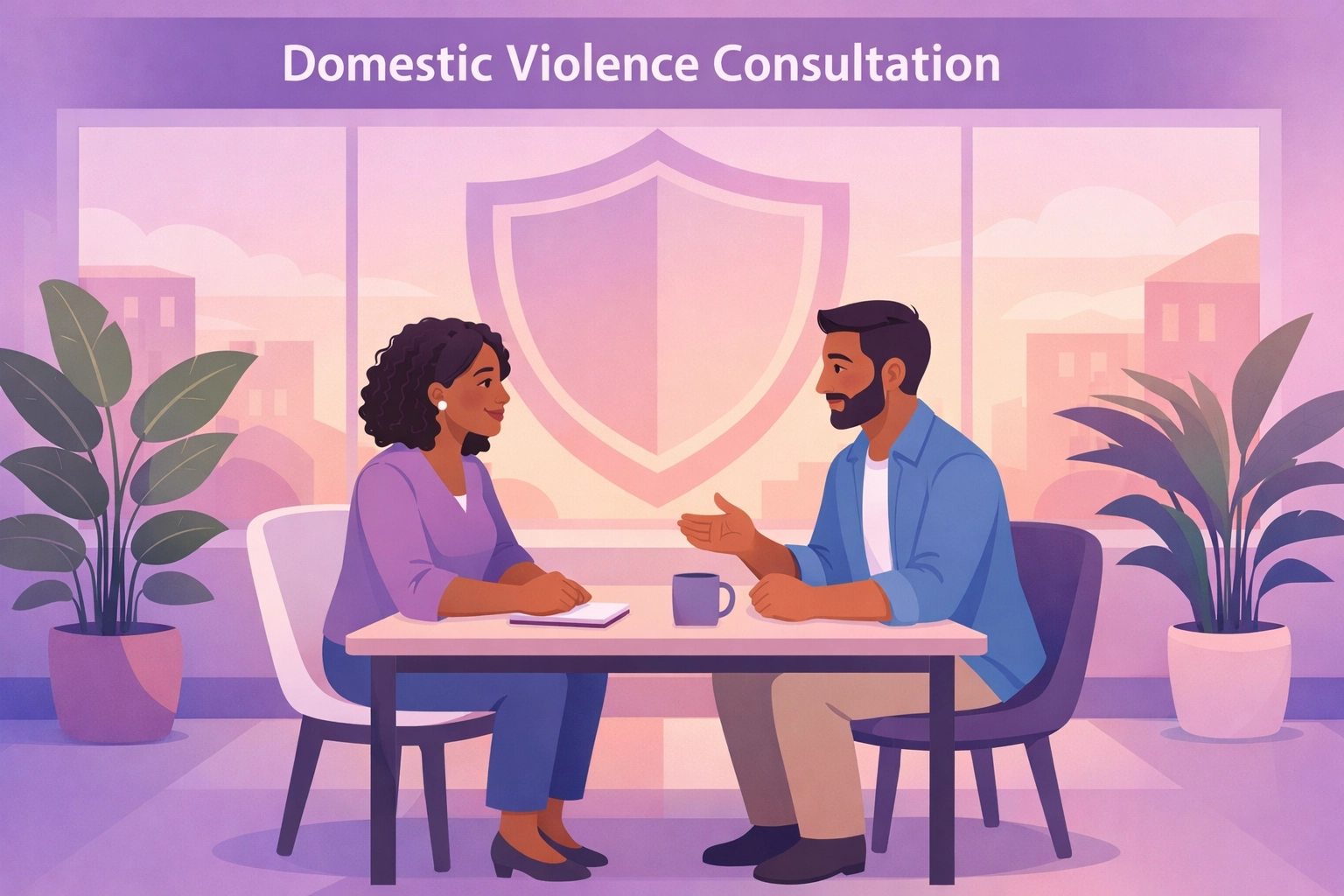
At Skiendziul & Luzzi Enterprises LLC, we believe that a healthy business starts with a safe environment. We offer specialized Domestic Violence Consultation to help owners understand the signs and create protocols that protect both the survivor and the rest of the staff.
Why Small Businesses Are the Front Line
As small business owners, we have a unique advantage: we actually know our people. We aren't just names on a payroll. We are teams. This proximity means we are often the first to notice when something is "off."
Maybe a top performer suddenly starts missing deadlines. Maybe someone who was always cheerful is now withdrawn. Maybe there’s an increase in "emergency" absences.
We have a moral and economic imperative to care. Supporting a survivor isn't just "being a nice person", though that’s a great start, it’s about protecting your human capital. By providing a supportive environment, you are preventing the loss of a talented team member and maintaining the stability of your workforce.
How to Create a Supportive Workplace Environment
So, what can we actually do? We don't expect business owners to be social workers, but we can be strategic leaders.
Open the Dialogue: Make it clear that your office is a safe space. You don't need to pry, but you can ensure that your employee policies include language about domestic violence leave or support.
Strategic Planning: Integrate safety protocols into your general business planning. Who has access to the building? What is the procedure if someone is being harassed via the company phone?
Connect to Resources: You don't have to have all the answers. Have a list of local resources and nonprofits ready. We are big fans of the work being done at Food, Love, and Hope and our own initiative, Arming the Impacted, which focuses on empowering survivors.
Flexible Scheduling: Sometimes, the best thing you can do for a survivor is to give them the flexibility to handle their legal or medical needs without the fear of losing their paycheck.
The Bottom Line: Compassion is Good Business
At the end of the day, we are all in the business of people. Whether you are planning Corporate Events or looking for Tax Representation, your success depends on the people standing next to you.
The $9 billion cost to industry is a wake-up call. It tells us that we cannot afford to ignore what happens behind closed doors because those doors eventually open, and the trauma walks right into our storefronts and offices.
By addressing this issue head-on, we aren't just saving money; we are saving careers, families, and lives. We are building a society of healthy, productive individuals who can carry the torch for the next generation.
Let’s Work Together
If you’re looking to strengthen your business from the inside out, we’re here to help. Whether it’s through Strategic Planning or creating a more robust workplace culture, we will work with you to create a plan that fits your unique needs and budget.
We believe in a world where small businesses are the backbone of a safe and thriving community. Let’s make that a reality for your team.
Please feel free to visit our About the Owner page to learn more about our mission, or check out our Blog for more insights on running a socially conscious and profitable business.
JOIN US in making the workplace a safer, more productive place for everyone.
Let’s chat soon. For any assistance required, please reach out. We’re in this together.

Comments